How to Start an Agency and Get Clients: The Systems & Sales Process You Need
Listen on your favourite platform
| Platform | Link |
|---|---|
| YouTube | Listen on YouTube → |
| Apple Podcasts | Listen on Apple Podcasts → |
| Transistor | Listen on Transistor → |
| pod.link | Listen on pod.link → |
What Does How to Start an Agency and Get Clients: The Systems & Sales Process You Need Talk About?
This episode of Agency Uncovered focuses on the practical foundations for starting and scaling an agency. Host Sasha Damon talks with Mads Singers about why most freelancers become agency owners by accident, taking on more work than they can handle and then hiring help without a clear operating model. Mads pushes back on that approach and argues that founders should first identify one scalable, repeatable process they can deliver over and over again. He explains that niching down at the process level, for example focusing on ecommerce email marketing through a single tool like Klaviyo, is more effective than simply picking an industry or accepting anyone who comes your way.
The core mindset is, instead of saying 'anyone, come my way,' figure out the thing you're best at.Mads Singers
Who Is Featured on How to Start an Agency and Get Clients: The Systems & Sales Process You Need?
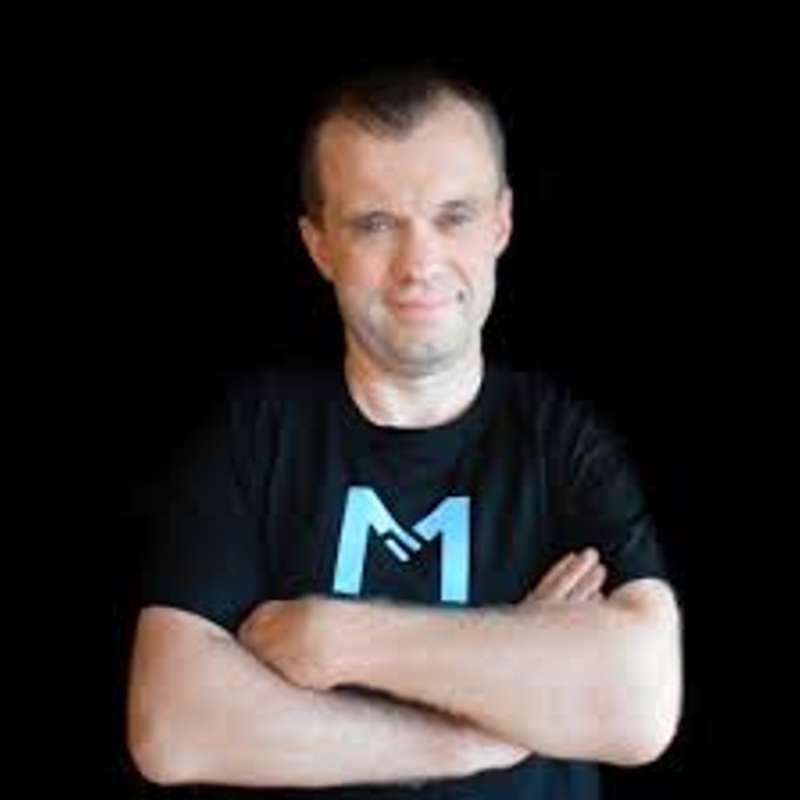
Mads Singers is a management coach and the founder of a recruitment company. He brings a direct, systems-focused approach to agency building, drawing on his work with companies that struggle to scale beyond the founder. His advice is centered on practical operations rather than abstract theory. In this episode, Mads explains why a repeatable process should come before marketing or sales, how to document a sales script so a new hire can actually succeed, and why 80/20 customer analysis can protect an agency from low-value work. He also touches on people management, noting that basic one-on-one and feedback structures prevent most growing pains.
What Are the Key Takeaways From How to Start an Agency and Get Clients: The Systems & Sales Process You Need?
- Starting an agency should begin with identifying one scalable and repeatable process you know reasonably well rather than serving anyone who comes your way.
- Niching down at the process level is more effective than niching by industry because it lets you deliver a consistent service repeatedly.
- Before hiring a salesperson, you must document your sales process, script, and customer details or the hire will very likely fail.
- Successful marketing is about return on investment, not choosing the cheapest or most expensive channel, and understanding customer lifetime value helps you decide what you can afford to pay for acquisition.
- Building a solid people management framework with regular one-on-ones and feedback solves most of your headaches as soon as you start hiring.
The better documented it is, the more likely you succeed.Mads Singers
Is How to Start an Agency and Get Clients: The Systems & Sales Process You Need Worth Listening To?
This episode is worth listening to for anyone who is tired of freelancing and wants to build an agency that runs on systems rather than constant founder effort. Mads Singers gives concrete, no-nonsense advice on identifying a scalable service, documenting the sales process, and making marketing decisions based on return on investment. The conversation is dense with actionable steps, not just motivational talk. The host, Sasha Damon, keeps the questions focused, which helps the guest cover delivery, sales, marketing, and people management without losing the thread. If you are in the first few years of running a service business, the episode will likely save you from common mistakes like hiring a salesperson without a script or chasing every client that comes your way.
Who Should Listen to How to Start an Agency and Get Clients: The Systems & Sales Process You Need?
- Aspiring agency owners
- Freelancers transitioning to an agency model
- Founders hiring their first salesperson
- Service business operators focused on systems
Where Can You Listen to Agency Uncovered?
You can listen to Agency Uncovered on Spotify, YouTube, Apple Podcasts.
What Are Listeners Saying About This Episode?
Mads breaks down the exact systems you need to start and grow an agency. The sales documentation advice alone is worth the listen. Five stars.
Jordan M.Finally an episode that skips the fluff and tells you how to choose a repeatable process. I took notes on the 80/20 customer point and immediately applied it.
Priya K.This podcast gave me a clear blueprint before I hire anyone. The point about marketing ROI and customer lifetime value changed how I think about my budget.
Alex R.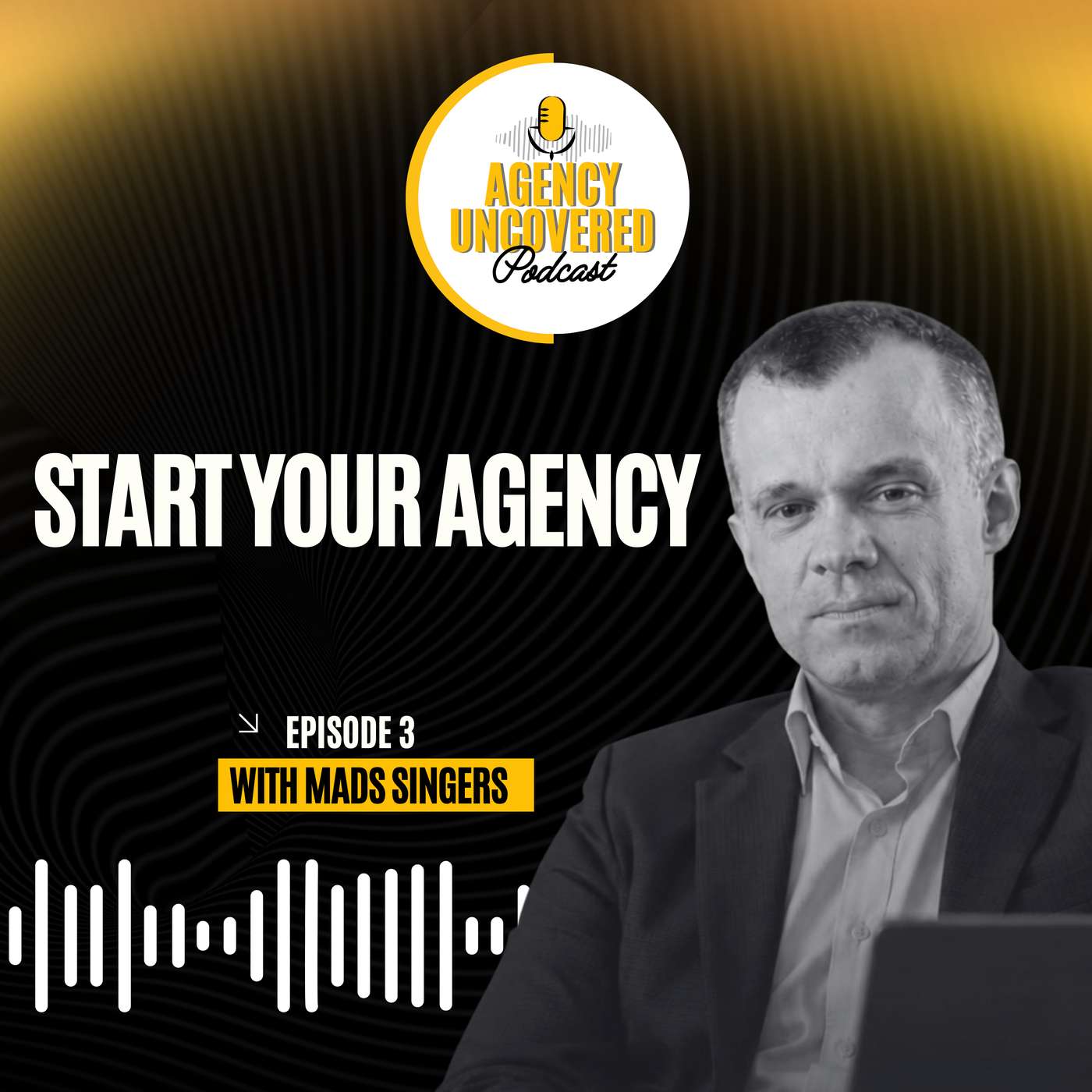
How to start an agency - picking one repeatable process, documenting delivery and sales, getting your first clients, and choosing between an agency and freelancing.
Most agencies are accidents — a freelancer gets busy, hires help, and inherits a business model nobody designed. In this episode of Agency Uncovered, Mads Singers explains how to start an agency deliberately: identify the one scalable, repeatable process you can run over and over, then build three machines around it — delivery, sales and marketing. He shares the 80/20 client audit every owner should run, why 95% of sales hires fail without a documented sales process, how he built every one of his companies through in-person networking as a self-described introvert, and an honest answer on whether you should start an agency at all or stay freelance.
Key Takeaways
- Start with the one repeatable process, not with whoever happens to email you.
- Niche at the process level, not the industry level — e-commerce email marketing on one platform beats “email marketing”.
- Run the 80/20 audit. Which 20% of clients pay 80% of the money, and which 20% cause 80% of the headaches?
- Design delivery so a novice could run it. If someone with zero expertise can execute the documented process, hiring becomes easy.
- Document the sales process before hiring a salesperson. Without a script, ICP and product knowledge in writing, roughly 95% of sales hires fail.
- Marketing is about ROI, not cost. Cheap channels are not automatically the right channels.
- Put a people-management framework in from the first hire — one-on-ones and feedback solve most future headaches.
- Get your first clients in person. Network, Chamber of Commerce events, Meetup — trust is built fastest face to face.
- Trade services or start on a revenue share to get the first case studies on the board.
- Pick one lead generation channel and stick with it until it works — you cannot be good at seven at once.
- You do not have to build an agency. Freelancing carries less responsibility — but even freelancers earn far more by niching to one repeatable deliverable.
Frequently Asked Questions
How do you start an agency?
Identify the one thing you do well that can be turned into a scalable, repeatable process, then build delivery, sales and marketing systems around it. Document delivery so someone without your expertise could run it, document the sales process before you hire a salesperson, and pick one marketing channel to make work.
What systems does a new agency need?
Three: a documented delivery process, a documented sales process including script and ideal customer profile, and a marketing engine measured on return on investment. Add a basic people-management framework — one-on-ones and feedback — as soon as you hire.
How do you get your first agency client?
Start with your existing network, then get out in person — local Chamber of Commerce events, Meetup, Facebook Events. Without case studies, face-to-face trust is your fastest route to a paying client. Service trades and revenue-share deals are legitimate ways to get early proof.
Why do agency sales hires fail?
Because there is no documented sales process. Salespeople are rarely process-driven by nature; they need a script, customer profiles and product knowledge written down. Hiring a good salesperson into an undocumented process usually fails.
How many marketing channels should a new agency run?
One. You cannot run YouTube, LinkedIn, Instagram, email and in-person networking well at the same time as a solo founder. Pick one — ideally one you have some familiarity with — and stay with it until it produces.
Should you start an agency or stay freelance?
Neither is automatically right. An agency, structured well, gives you leverage and a better life; freelancing carries less responsibility and more flexibility. Either way, niching to one repeatable deliverable is what raises your income — one freelancer cut 80% of his overhead by selling the same automation repeatedly instead of custom builds.
Connect with Aristo Sourcing
Learn more about Aristo Sourcing and connect with the team:
- Website: https://aristosourcing.com
- LinkedIn: https://www.linkedin.com/company/aristo-sourcing
- Facebook: https://www.facebook.com/aristosourcing
- X / Twitter: https://x.com/AristoSourcing
Aristo Sourcing helps businesses scale by sourcing and placing skilled virtual assistants and remote professionals, with talent primarily recruited from South Africa and the Philippines.
About the Guest
Mads Singers is a management coach and the founder of Aristo Sourcing. He runs multiple companies, hosts a podcast with around 300 episodes, and has guested on roughly 500 more.
#StartAnAgency #AgencyGrowth #SOPs #SalesProcess #LeadGeneration #Freelancing #MarketingAgency #AgencyUncovered #MadsSingers #Entrepreneurship
00:00:00 — HOST
How to start an agency, and what do you need? We're here with Mads Singers. Let's get started. So Mads, how do you start an agency and what do you need?
00:00:10 — MADS
Yeah, so starting an agency is definitely always a big undertaking. My starting point — what I suggest to people — is figure out what you're very, very good at. Most people start out as freelancers. They're doing a lot of stuff, and suddenly there's more than they can physically handle, so they hire someone to help them. And that's typically how agencies build up. It's often not a very effective way of doing it — it's not a very effective business model to grow like that — because very often you end up doing a lot of different things based on whatever people you come in contact with.
00:00:47 — MADS
So the starting point for me, for setting up an agency, is figuring out: what is the one scalable, repeatable process that you can put in place, that you can do over and over again? And ideally something you know reasonably well. You don't have to be the world expert — you're allowed to magically become a lot better when you execute it repeatedly — but you definitely want to know it and understand it to a certain level.
00:01:15 — MADS
So as an example, let's say you're doing email marketing — email outreach. If you're doing email outreach for clients and you've done it for clients in the past, figure out what is the scalable, repeatable process that you can do over and over again. And very often it's niching down at a process level, not niching down at an industry level. It's not about the industry — it's about whether you can set up one scalable process and repeat that one thing. So let's say you do email marketing, you've always done e-commerce, and you want to do e-commerce email marketing for clients. That's a relatively niche market, and the majority of your clients would probably be using Klaviyo — so it's mostly the same tool. And you might even want to niche down further and understand: is it better B2B or B2C?
00:02:20 — MADS
The core mindset is, instead of saying "anyone, come my way," figure out the thing you're best at — because successful businesses are built on the back of doing what you're good at repeatedly, not just getting people to pay you a little bit of money. When you're doing the things you're best at, you get paid more, you get better results, and you enjoy life way more.
00:02:40 — MADS
With most companies — pretty much every single agency I go into and look at — I ask them a very simple question. 80/20: what is the 20% of the customers that pay you 80% of the money? And what is the 20% that create 80% of the headache? And there always are some. Often it's because they don't fit into the process — you've made some exceptions to bring them on board — or they're just not nice people to work with. In either of those scenarios, you probably don't want them. That's the challenge in the beginning: when you're small, you kind of have to take people on board. But the more you can stick to your guns — the more you can stick to your repeatable, scalable process — the faster you will be way more successful. That is really the core starting point: figure out the one thing that you can do, scalably and repeatably, over and over again.
00:03:33 — HOST
That's very interesting, and you touched on systems and processes. What systems and processes do you need to build and run a scalable agency?
00:03:42 — MADS
Generally, you want to know how you deliver. Some people don't even deliver it themselves — some of the agency owners I know started out in the early days by getting other people to do it. Not many agencies, but some do. I know a couple of guys who are hardcore salespeople, and they literally just run around and sell, and they have other people do fulfilment. So fulfilment can be outsourced. But in most agencies, fulfilment is the starting point — people are good at doing something and they start an agency with that skill.
00:04:20 — MADS
When you do that, it's about having well-established processes — building out and figuring out the nitty-gritty of not just how you do it, but how you do it effectively. My favourite thing is always to design a process and get someone who knows absolutely nothing about it to do it. Because I know that if I can break down a process and design it in a way that someone with zero knowledge or expertise in that area can execute it, then it'll be very easy for me to hire good people who can help grow and scale that way.
00:04:52 — MADS
So that's one part. The second part is the sales machine. Again, most people starting an agency — you are the sales guy or girl in most cases. The faster you can get out of that, the easier it gets. Some agencies might not even need sales calls — some agencies do really well with solid landing pages and solid offers. Just make sure that you're converting customers well, and it typically depends on the total cost of the service. If you're selling services at 20K a month, you probably need to get on a call.
00:05:30 — MADS
Scaling sales — the hardest part is that people go out and hire a salesperson without having put it into a process. You have to document your sales process. You have to have a sales tactic — a script you go through — because you can't hand it over to someone who doesn't know your business. It's probably the number one failure when people hire salespeople: they have no documented process. They expect they can just hire a good salesperson and they'll figure it out. And I run a recruitment company, and I'll tell you — 95% of the time, if there isn't a documented sales process, the salesperson fails. Most of the time sales hires fail because there's not a clearly documented process. In most cases, salespeople are not very process-driven; they're not very organized. They need it all: they need a script, they need to know who your customers are, they need to know all about you and your product — and it needs to be documented. The better documented it is, the more likely you succeed.
00:06:36 — MADS
And then you need a marketing machine. Again, in the early days you are often the marketing machine as well. But the more you can understand your customer lifetime value — the more you understand how much you can afford to pay to acquire a customer — the earlier you will be successful in your marketing efforts. In the beginning, everyone always does the cheapest thing they can, which is posting on social media and so on. But marketing is not about cheap — it is about results. It doesn't necessarily mean the cheapest or the most expensive model is right. All marketing is about return on investment. If you're spending $1,000, do you get more back? If your marketing efforts bring back more money than they cost you, that is generally good.
00:07:19 — MADS
Lastly — and I'm a management coach, so I have to say this — make sure that as soon as you start hiring people, you have a solid people-management framework: for how you do one-on-ones with them, how you give them feedback, and so on. Getting the fundamentals right — getting things down to a process from the beginning — honestly solves 80–90% of your headaches.
00:07:45 — HOST
So the systems and processes are the business blueprint for someone to successfully leverage their efforts into the business's scalability, and to make sure nothing goes to waste. So how do you ensure that you have a successful agency business model?
00:08:05 — MADS
Generally, the business model — as I said in the beginning — is very much about ensuring that you have a scalable process. Over time, play with your pricing. Typically in the early days you charge less to bring in customers, because you don't have much proof and you don't have as much experience. It's important to raise your prices as the company grows, so that your company can afford to build layers, hire more people, and grow. But generally, your core focus is getting the business model right from the beginning. And sometimes you adjust — sometimes you get a couple of clients and realize that you picked one thing, but a slightly different variation is better, and then you move in that direction. That happens for a lot of companies. And if you have an existing agency, we actually have an episode on that as well on our YouTube channel that you can go and check out. But getting the business model right is so key.
00:09:10 — HOST
So you've got your business model. Now, how do you get that first agency client?
00:09:18 — MADS
Getting the first client — in most cases, trust is most easily built in person. So start with people you already know or have met: reach out to your network, reach out and say, "Hey, this is what we're doing, this is what we're good at — let me know." That's the starting point for most people.
00:09:40 — MADS
What I would typically say is: show up in person where you live — unless you live on a tiny little island by yourself, and if you do, I'm jealous. Wherever you live, there's typically stuff happening nearby: local Chamber of Commerce events, local networking. Go on Meetup.com or Facebook Events, find some events, get out in the world, and get used to telling people what you do. I'm an introvert by nature, but I built all of my companies through networking. When you don't have a lot of credibility — when you don't have a lot of case studies — if people meet you in person and you seem like a reliable person, you are much more likely to convince someone to pay you some money.
00:10:25 — MADS
So that's generally always my go-to: obviously start with your network — people you know — but the next step is get out in the world and meet people in person. They will also give you way more feedback. You'll meet people who'll tell you all sorts of stuff. Find people who are willing to pay you some money. Sometimes make deals with people: "Hey, I need a website — you need what I'm doing — let's exchange services." Just getting some case studies in is often so important. So even if you end up having to do one or two jobs at a reduced rate — or what you can sometimes do, if you're generating revenue for them, is say, "Hey, we'll start for free, but once I show you we're making you money, we start splitting" — there's a lot of ways to go about it. In the early days, it's just: get someone on board, get someone paying you a little bit of money, and prove to them — and yourself — that you can do what you say you can do.
00:11:21 — HOST
I like what you said about getting out in the world and physically being in person in your local space, because it contributes to what you said earlier about your business model — refining it in the beginning stages and then finding where you can niche down to really target your potential clients. So, how do you generate leads for your agency?
00:11:53 — MADS
Lead generation — again, "get out in the world" is one that I tell most people. And then: pick one channel and make it work. A lot of people say you have to be everywhere all the time. But I can promise you, if you are an individual starting a new company, you cannot do YouTube and social media and Instagram and LinkedIn and email marketing and in-person networking. You cannot be everywhere. Pick one channel — either one that you're familiar with or one you feel good about — and make it work. You could say, "I've seen many people succeed on YouTube, I want to get into it." What you do is you start, and you stick with it till it works.
00:12:31 — MADS
Every time people come to me and say email marketing doesn't work, or YouTube doesn't work, or social media doesn't work — well, you haven't been trying hard enough, long enough. There are people who make it work, so it can work — if you become good enough at it. But the problem is you're never going to be good at seven things at the same time. What most people do is a bit of everything all the time, and it very often gets very little results. Obviously, if you have a background in any particular medium or channel, that gives you a head start. But even if you don't have any experience with it at all, just look around at what a few things people want, and get started.
00:13:12 — MADS
I've seen so many people start by randomly grabbing the phone and recording videos by themselves, or doing a podcast with random strangers on the street — I've seen it all. And the thing is, if you want it enough — if you keep going — you're not going to suck all the time. I run a podcast with about 300 episodes, and I've probably guested on 500 episodes. My first episodes were not great. The first time I was a guest on other people's episodes — not great. The more you do it, the better you get, just like everything. And that's the second thing: if you tell me "I can't write" — well, okay, try writing very badly for six years in a row; eventually you'll get a little less bad. Anything can be learned over time. But obviously, pick the one thing that is your thing. That's my recommendation.
00:14:05 — HOST
Alright — so picking one thing, being consistent, showing up even if the first efforts aren't so great. I like that. So, there's a big debate on whether you should start an agency or freelance. Why should you start an agency instead of freelancing?
00:14:25 — MADS
I don't know if you should — but there are definitely certain benefits to it. Small companies are often hard. With a bigger company, the more people you have — if you build the structure right — life gets easier, because there are people doing things and someone to hand things to. I live a lot better nowadays because I run companies I don't have to operate all by myself. But fundamentally, there are a lot of benefits to being a freelancer too: you often have less responsibility and a bit more flexibility. So an agency is definitely not something you have to do.
00:15:03 — MADS
I would say: if you are a freelancer listening to this episode, really honing in on the one thing you're really good at — even as a freelancer — can help you make a lot more money. As an example, I have a good friend I've been helping who runs an automation agency. In the beginning, he was making anything for anyone. The problem was every new project was exciting and fun, but it was a whole different build each time. He then realized: "I can just sell the same automation over and over — I just adjust it slightly for each customer." By doing that, he cut about 80% of his overhead and his cost, and he still provided the same value for the same amount of money. Actually, he could charge more money, because he delivered results way faster. So again — niche down and really understand your process. It's just so key.
00:16:08 — HOST
That was very interesting, Mads. Thanks for your time.